


How to Equip a Home Workshop – A Practical Guide
A well-equipped garage or workshop allows you to handle various small repair and renovation jobs around the house and garden, service your car or bicycle, and even pursue hobbies such as model building. It’s one of the most useful spaces in any home. Yet, equipping a home workshop often remains at the bottom of renovation priorities. The topic is usually postponed until something breaks - and then we rush to buy workshop furniture or tools ad hoc, focusing on speed and low price. In doing so, it’s easy to sacrifice quality and functionality, which can lead to frustration later on. This article explains why such a quick-fix approach can cause problems and offers practical advice on how to properly furnish your home workshop with reliable furniture and accessories that suit your needs.
Start with Space Organization
Before buying equipment, start by getting a clear overview of your space - quite literally. Measuring your room and its layout will help you determine the right dimensions for tables, lighting intensity, shelving, and tool setups. Use a good measuring tape, note the distances between walls, windows, and doors, and sketch the layout on paper. This prevents issues such as furniture blocking doorways or causing accidental bumps and injuries.
Ventilation is another key factor: whether your workshop is in a garage, basement, storage unit, or container, ensure proper air circulation. Each location has its pros and cons - humidity, dust, flooring, and accessibility (steps, thresholds, ramps) all influence your choice of materials and furniture. Also, evaluate natural light: window size, quantity, and ceiling height all affect illumination needs.
The Workshop Table – The DIYer’s Best Friend
A solid workbench is the heart of every workshop. It’s where you’ll saw, hammer, drill, tighten, loosen, or even read technical manuals. Because it’s used for both precise and heavy-duty tasks, a durable and ergonomic workbench is essential. Here’s what to focus on:
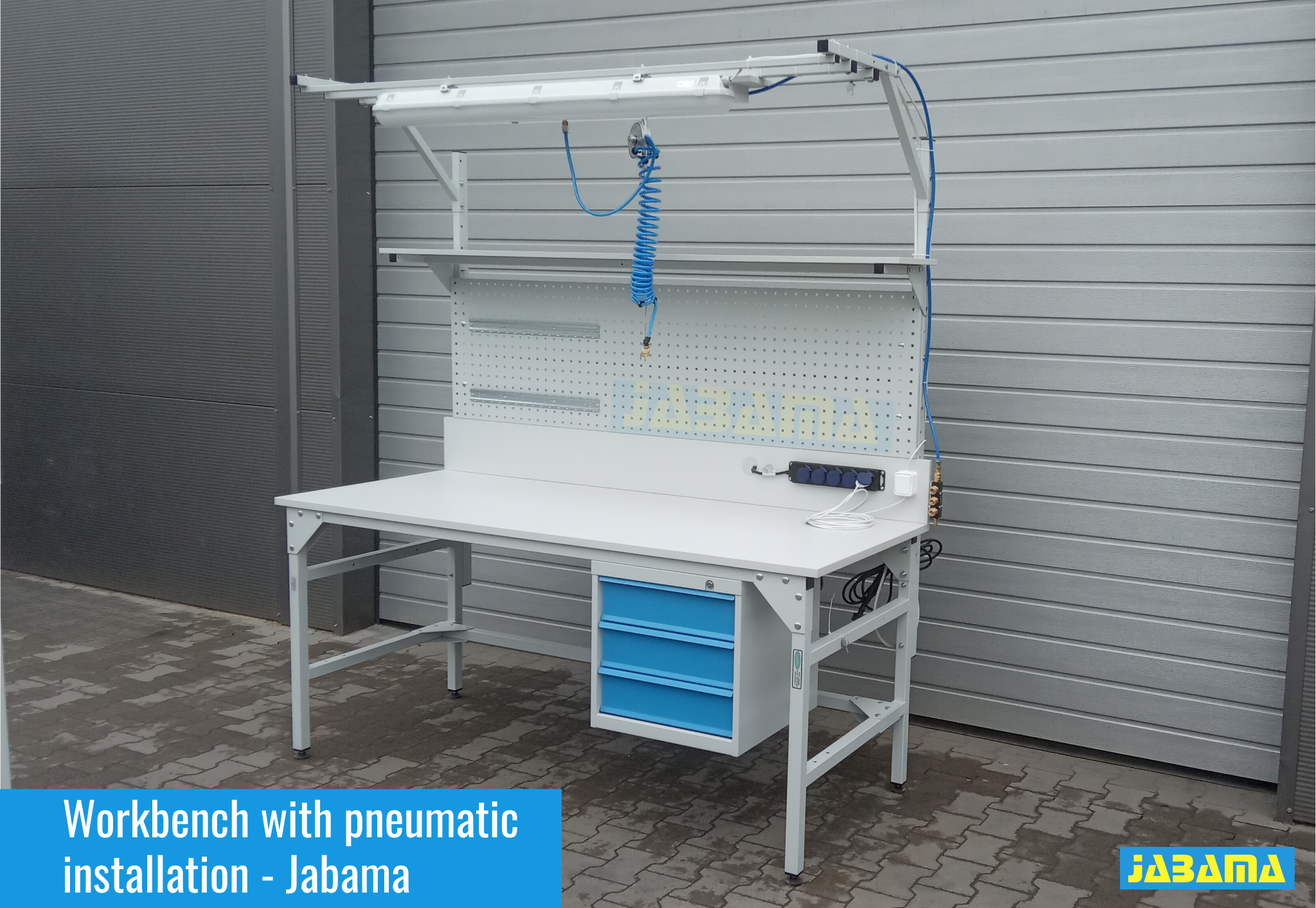
- Workbench structure – choose a metal frame, ideally steel, for the best cost-to-performance ratio. Powder coating prevents corrosion, and welded reinforcements ensure stability and high load capacity.
- Worktop type – thick particleboard or plywood tops are great choices. Metal or rubber coatings increase resistance to oil, grease, and wear, while offering a steady surface to mount a vise or bench drill.
- Lighting – precise tasks require good lighting. Integrated central lighting or under-shelf lamps improve visibility and safety, and cable channels help hide wiring. Side lamps can be added if needed.
- Cabinets and drawers – these provide quick access to frequently used tools (hammers, screwdrivers, wrenches, pliers). Keeping them near your workstation saves time and maintains order. Foam inserts or shadow boards help organize tools.
- Perforated panels – perfect for hanging drills, grinders, soldering irons, rolls of paper, or even a water bottle. Dedicated hooks keep tools within sight and encourage tidiness.
- Shelves – great for storing containers and accessory kits, but avoid clutter. Organize only essential items to maintain workspace efficiency.
- Power strip or cable channel – provides safe and accessible power for electrical tools and can accommodate hydraulic quick couplings for compressed-air tools.
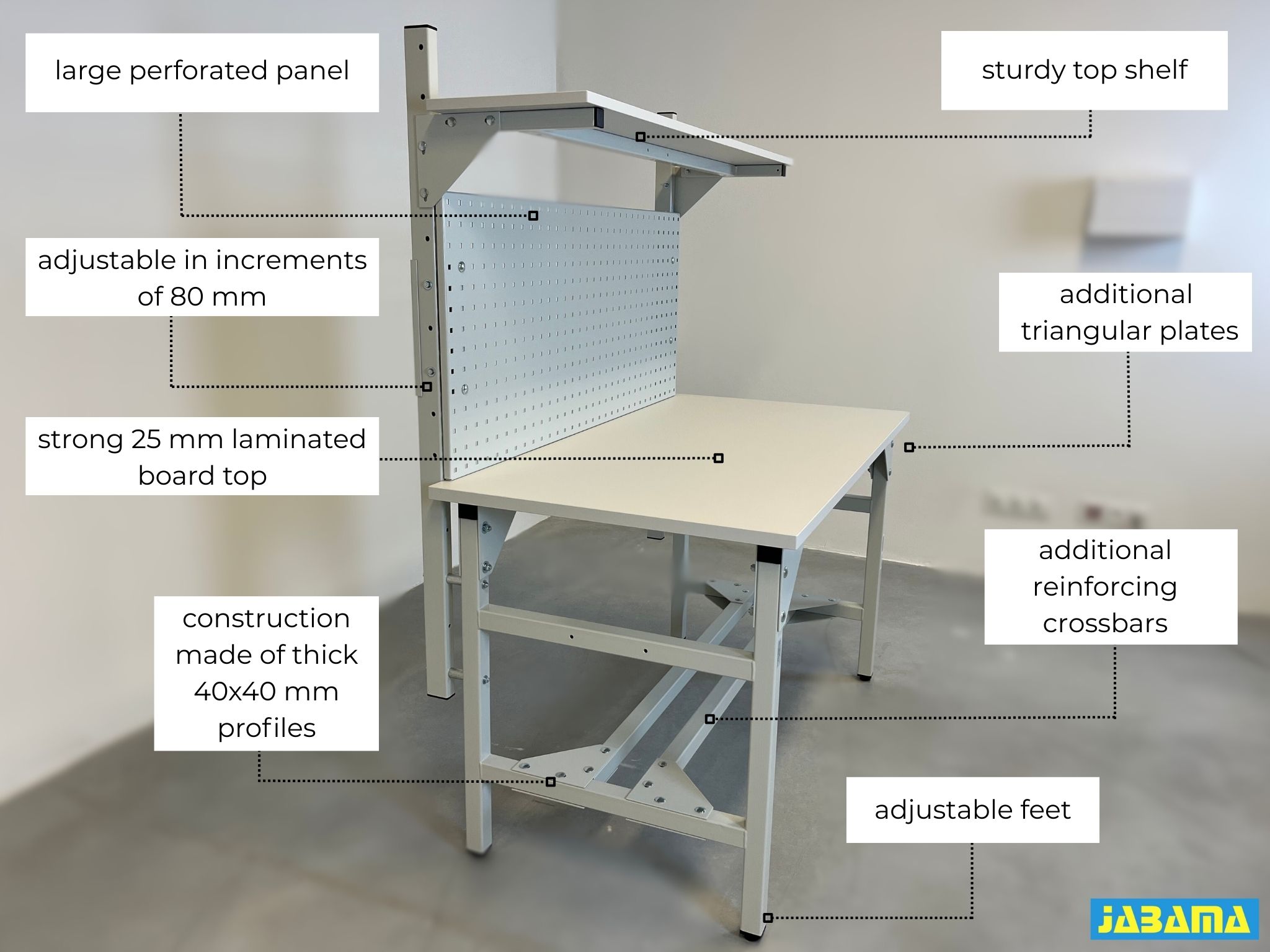
A well-built, professional workbench will serve both hobbyists and professionals for many years. Contrary to popular belief, high-quality industrial benches are perfect for home use - sturdy, ergonomic, and reliable. Investing in one ensures safety, efficiency, and comfort, and with a well-designed layout, your workstation can even become the centerpiece of your workspace - the crown jewel of every DIYer’s garage.
Efficient Space Management – Metal Shelving
Proper storage management is essential. Workshops naturally accumulate a variety of tools and "just-in-case" items. To keep things tidy and accessible, metal shelving is indispensable.
- Standard shelving units – available in various sizes and weight capacities. Ideal for tools, spare parts, or supplies. For safety, heavier units should be anchored to the wall.
- Container shelving – designed for plastic bins that make it easy to store and sort small parts like screws, nuts, washers, and fittings. Label containers for efficient organization and easy identification.
With such a wide range of designs, you can easily find shelves suited to your workshop’s scale and layout. Specialized models are also available for items like car tires or small accessories.
Ergonomics in a Home Workshop – Cabinets
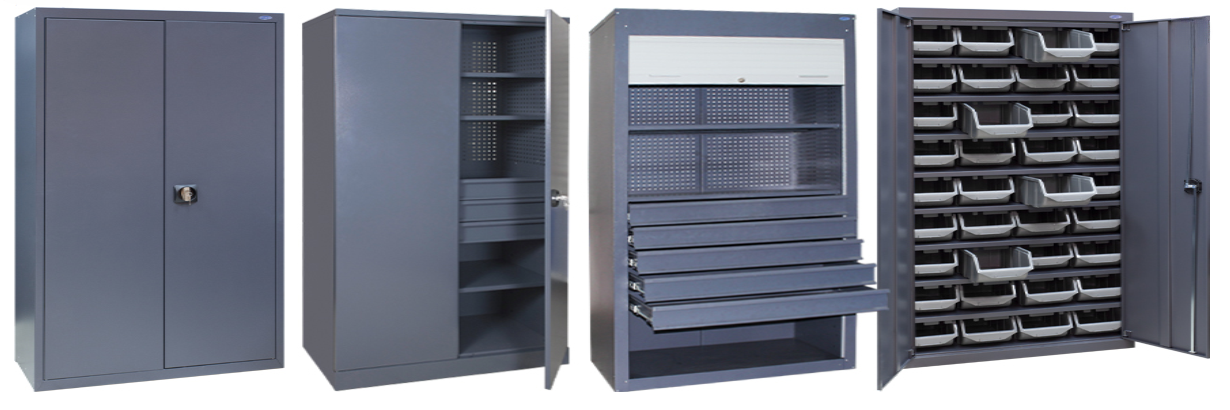
If space is limited or dust buildup is a concern, workshop cabinets are an excellent solution. Their enclosed design protects contents from dirt while maximizing vertical space. Most are made of powder-coated steel for durability and corrosion resistance. Lockable versions keep dangerous tools out of reach of children.
For tighter spaces, models with rolling shutters instead of standard doors are practical - they save floor space and prevent door panels from blocking movement. Perforated panels in the cabinet provide ventilation and allow for tool hook installation, increasing storage flexibility. Adjustable shelves further enhance the customization options for the cabinet space.
Improving Workflow with Workshop Trolleys
If you have extra room-or if your work occasionally moves between areas-consider adding workshop trolleys. These mobile units make tools easily accessible away from fixed shelves and simplify transporting tools, parts, or materials.
Trolleys come in various configurations, with multiple drawers or compartments, and can be fitted with foam inserts to prevent tools from sliding. You can choose between empty trolleys to fill yourself or pre-equipped models that include complete tool sets.
Safety – A Top Priority in the Garage
Never overlook safety when setting up your home workshop:
- Fire extinguisher – essential if you use grinders, torches, or welding equipment near oils or fuels. Mount it in an easy-to-reach, visible spot (but out of children’s reach).
- Lighting – good general and task lighting prevents eye strain and accidents. Consider dedicated lamps for workbenches and cabinets.
- Edge and corner protection – protect against sharp table or shelf corners near walkways.
- Protective gear – goggles, gloves, ear protection, and masks are a must. Adjust your gear to the tools and materials you use.
- First aid kit – even with all precautions, accidents can happen. Keeping one nearby can make a life-saving difference.
Optimizing Tool and Furniture Usage
Once you’ve purchased your workshop furniture, install it according to a planned layout. Follow your measurements carefully to avoid blocked access or accidental collisions. Pay attention to details such as:
- Cables – loose cables create tripping hazards. Integrate power strips or use organizers to keep wires tidy.
- Tool organization – store tools by function and frequency of use. Keep your screwdrivers and hammers within arm’s reach, while drills should be paired with drill bits and grinding tools with their discs. A logical system increases efficiency and safety.
By organizing your workspace thoughtfully and investing in durable, ergonomic furniture, you’ll create a safer, cleaner, and more efficient home workshop - saving both time and frustration in the long run.