



How to Design and Optimize a Packing Table for Maximum Efficiency?
Online sales have grown rapidly, creating new challenges for shipping companies, logistics centers, and e‑commerce warehouses. That’s why continuously improving efficiency, organization, and process flow is key to success and competitiveness in the demanding logistics industry. One effective way to boost performance is investing in well‑designed packing tables, a fundamental piece of warehouse equipment. A properly organized packing workstation offers better speed, ergonomics, and user comfort while reducing the risk of errors and ultimately cutting operational costs. This article explains how to design an efficient packing table and which accessories can help you optimize it.
What Are Packing Tables Used For?
Packing tables are essential equipment for warehouses, logistics centers, online stores, wholesalers, production sites, and service facilities where goods need to be prepared for shipment. It is at these tables that packing tasks take place, including:
- Order picking and assembling items for shipment
- Printing shipping labels and preparing documentation
- Protecting items with proper packaging and fillers
- Sealing goods in cartons, envelopes, or poly mailers
- Labeling and preparing parcels for dispatch
Key Features of an Efficient Packing Table
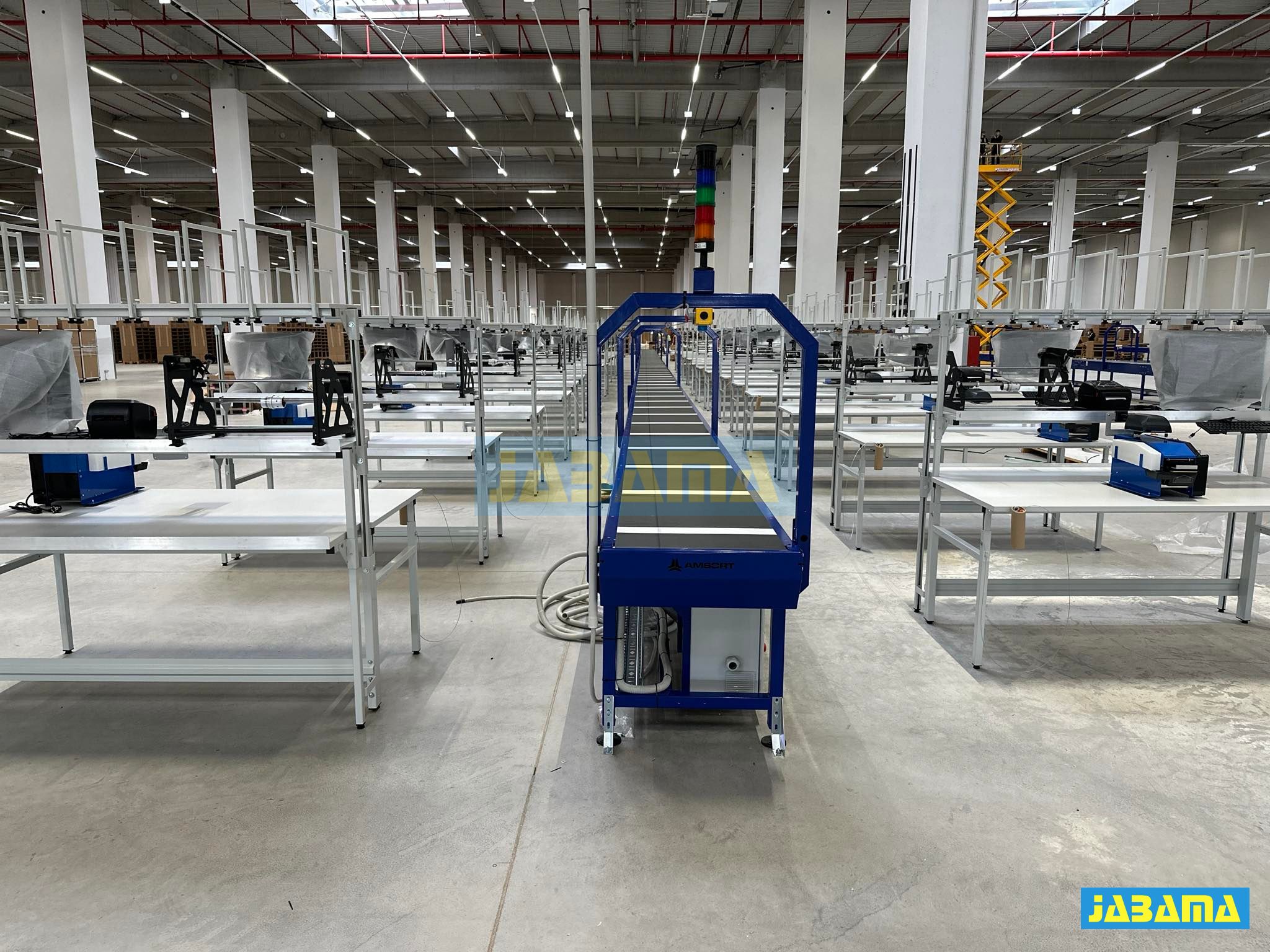
An efficient packing workstation must support all the above activities while maintaining ergonomic comfort. The table should have a durable frame, modular design, and compatibility with specialized accessories - including shelves, storage bins, rollers, and dispensers - which enhance workflow. Flexibility is crucial: the table should adapt not only to the type of packaged goods and daily workload but also to the physical needs of individual users.
Benefits of Optimizing a Packing Station
A properly designed packing table improves every aspect of warehouse performance. It boosts speed, increases productivity, and helps reduce costs by minimizing packaging waste, handling errors, and returns. It also brings order, systemization, and workflow clarity - key factors in high‑volume fulfillment operations.
Structure and Materials
- Construction Base
The ideal table frame should be made from welded and bolted powder‑coated steel profiles, which ensure strength, prevent corrosion, and provide remarkable stability and load capacity while minimizing vibrations. - Worktop Selection
- Size: The tabletop should allow free movement and rotation of parcels while keeping all tools within reach. Oversized tables may reduce ergonomics — users should never overreach for accessories or tools. Jabama’s packing tables are offered in six standard sizes (1200×700, 1500×700, 1800×700, 1200×900, 1500×900, 1800×900 mm), with custom dimensions available upon request.
- Material: For most operations, a laminated board (18–25 mm thick) provides sufficient durability. For heavy or abrasion‑intensive tasks, reinforcement with a metal or ribbed rubber layer is recommended.
- Load Capacity: Strong tables can handle up to 300 kg, allowing workers to prepare heavier packages and mount additional devices like scanners or printers safely.
Accessories That Enhance Packing Station Efficiency
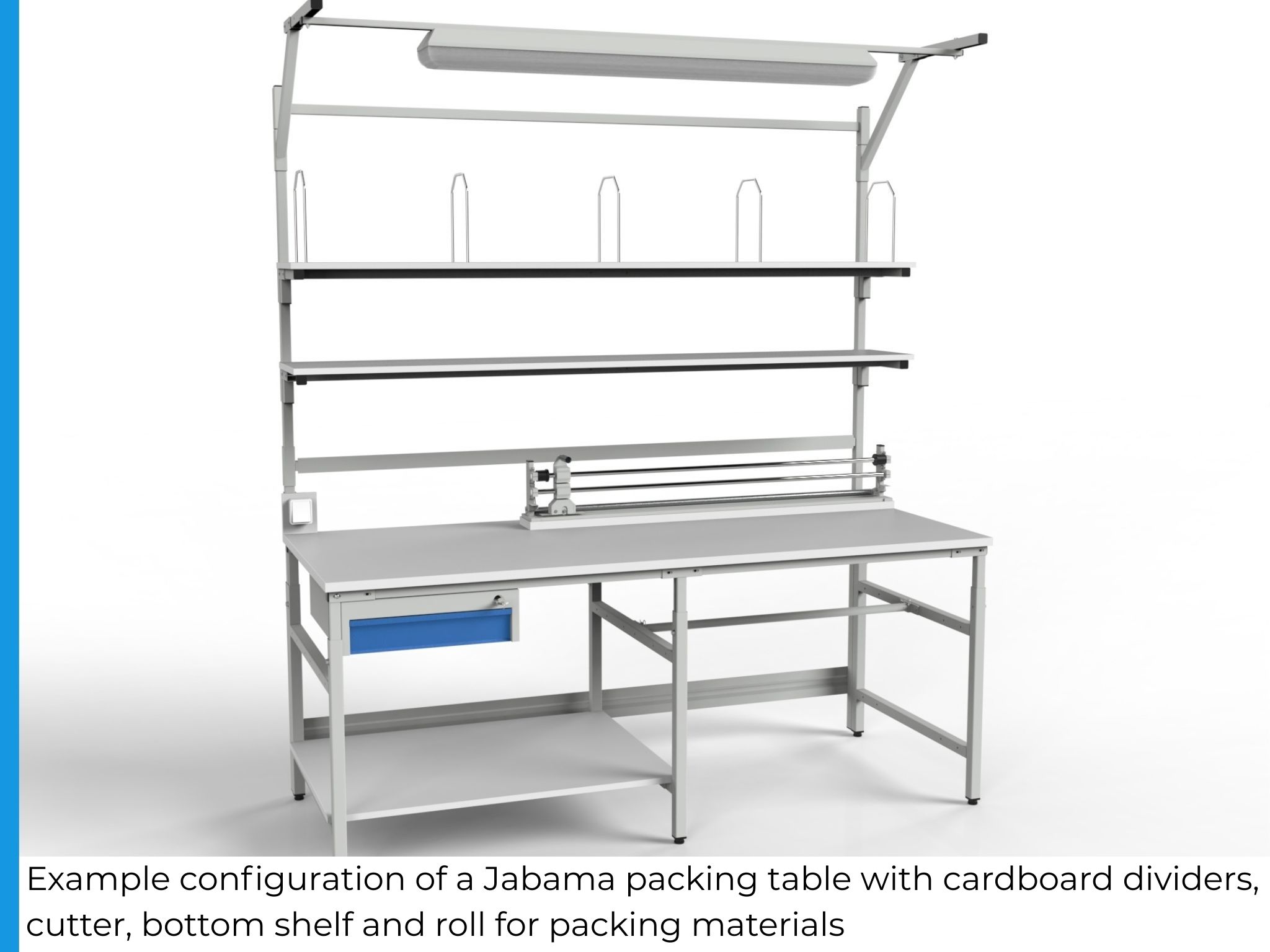
A modular design allows tables to be equipped with many additional components for optimizing logistics processes:
- Overhead or under‑mounted shelves (tilting or edged)
- Drawer cabinets and tool containers
- Integrated lighting mounted above the work area
- Perforated panels for tool hooks or display arms
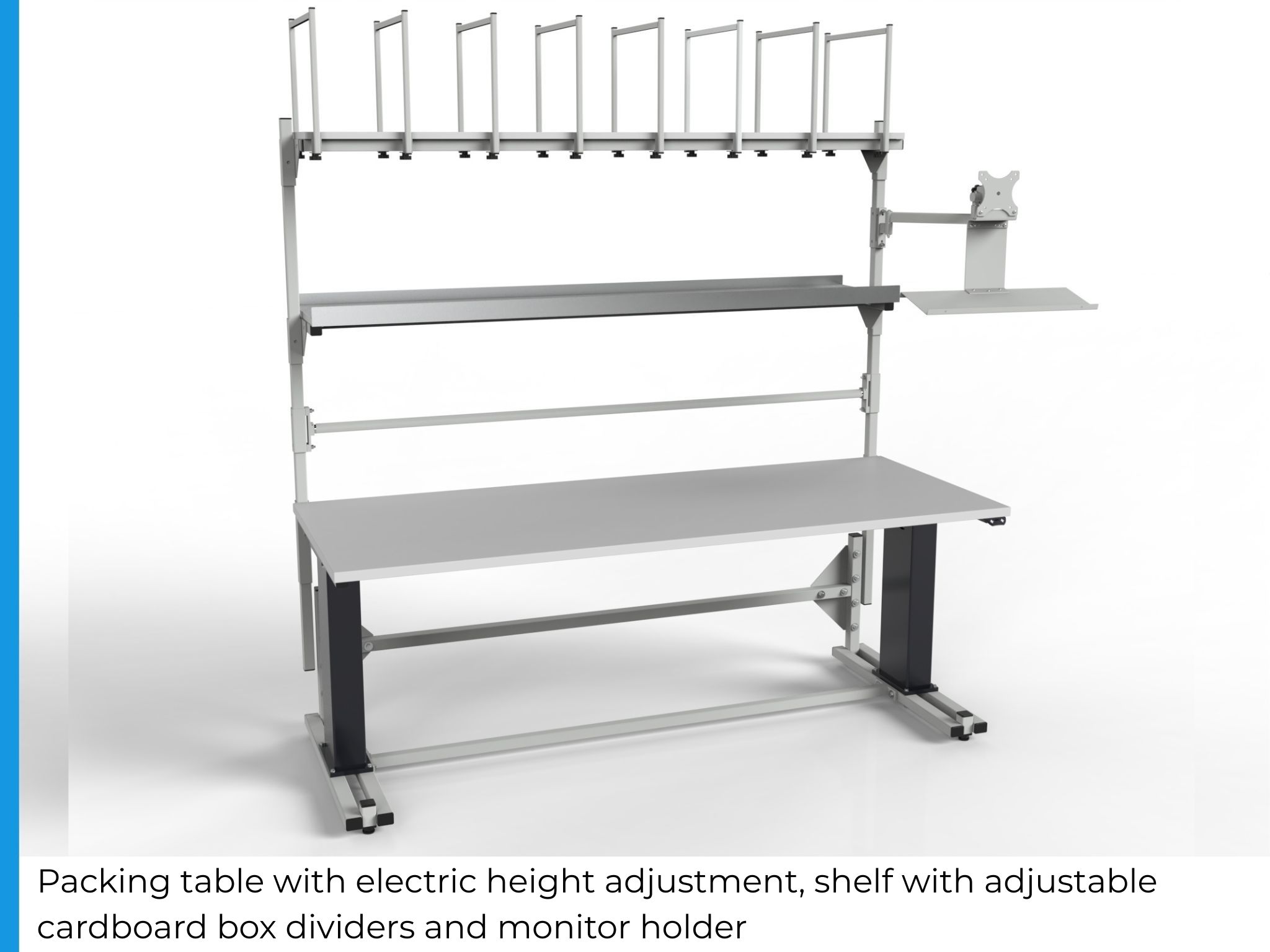
- PC accessories such as monitor mounts, computer shelves, or keyboard trays
Specialized modules include:
- Rollers for bubble wrap, stretch film, or paper
- Divided shelves for boxes and cartons
- Printer and scanner shelves
- Camera or signal light mounts
- Roller or ball conveyors for moving parcels
- Dispensers for tapes, labels, or documents
- Waste bag holders
- Storage bins and containers in multiple sizes
- Material cutters for packaging supplies
These elements make workflow smoother, safer, and much quicker. Jabama tables can also be custom‑designed to match specific operational layouts, ensuring that even highly specialized logistics facilities can achieve the best results.
What Should Be on an Ergonomic Packing Table?
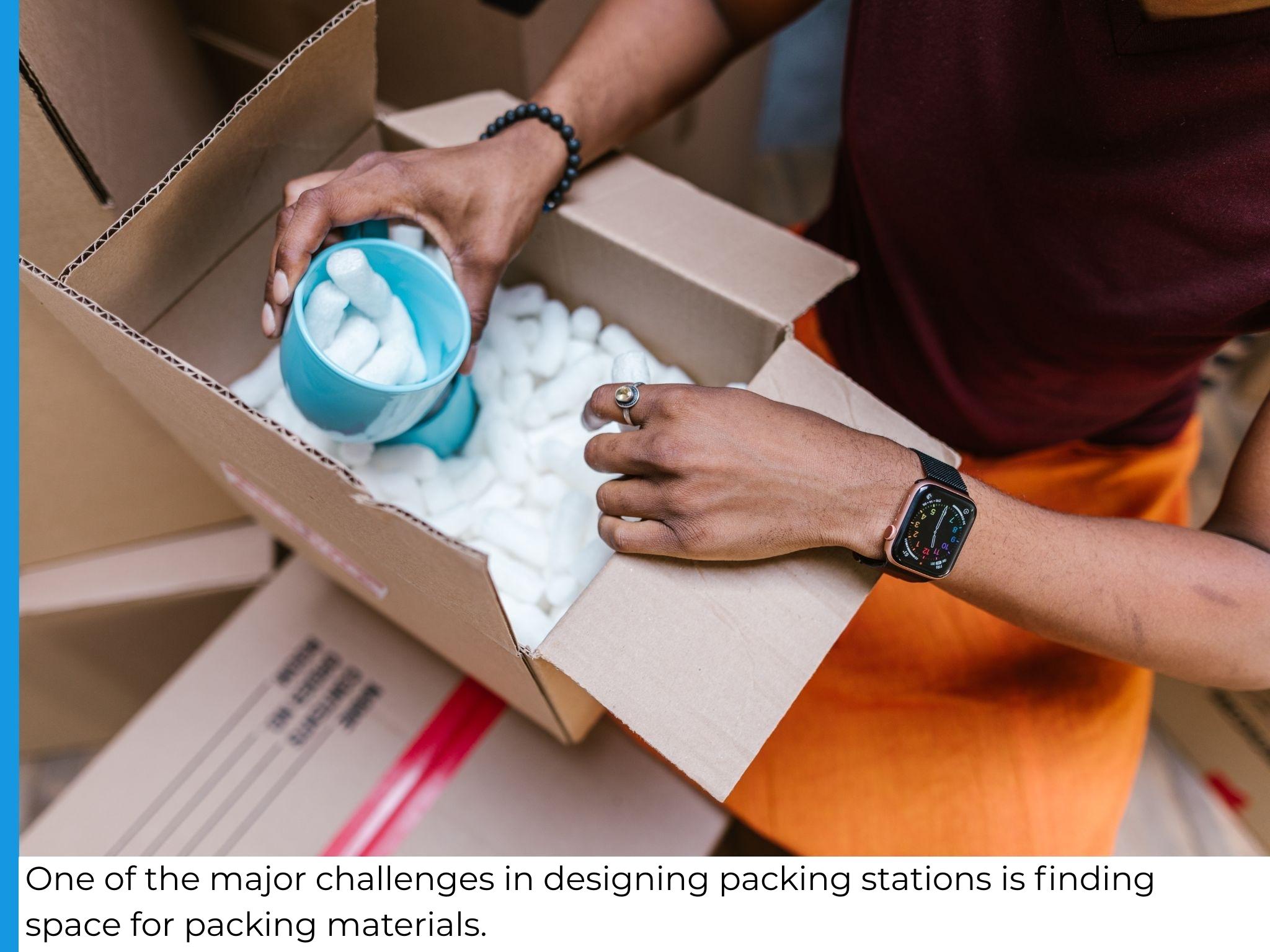
A well‑organized table includes all materials and tools required for order fulfillment and packaging. Essential packaging materials:
- Bubble wrap
- Stretch film
- Paper, foam, or air‑cushion fillers
- Cardboard boxes, envelopes, and mailers
Each material should have a dedicated place on or under the table - dividers for boxes and envelopes, dispensers for filler materials, and rolling bars for unwrap‑on‑demand films.
Other essential tools:
- Labels and stickers
- Promotional inserts for parcels
- Tape dispensers
- Scissors and safety knives
- Pens and markers
- Label or standard printers
- Scanners
- PCs, monitors, keyboards, and tablets
Assigning a fixed position for each accessory significantly improves organization and productivity.
Adjustable Height Options
Ergonomic packing tables should include height adjustment mechanisms:
- Manual screw adjustment: suitable when table height needs occasional correction. Loosen, adjust, and retighten for a stable setup.
- Electric height adjustment: controlled via remote switch and ideal for shared workstations in multi‑shift environments. Height‑adjustable tables provide maximum comfort and flexibility, supporting up to 300 kg loads.
- Crank adjustment: a mechanical option great for EX zones, offering a balanced mix of precision and reliability.
Types of Packing Tables
There are several basic types of packing tables, which can be grouped into basic stations, where the essential work related to order picking and packing is performed, and so-called auxiliary tables, which provide additional work space or, for example, enable the table to be integrated with a conveyor belt in the warehouse. For packing large shipments (e.g., furniture, carpets), special tables for packing large shipments are designed, with increased dimensions, also adapted to store larger packaging materials.
Jabama – Trusted Manufacturer of Packing Tables and Logistics Equipment
Designing an optimized packing station that supports e‑commerce order fulfillment and warehouse operations can be challenging. That’s why it’s best to rely on professionals with logistics expertise. Jabama offers fully customizable, modular packing tables crafted from top‑quality materials that ensure durability, load capacity, and worker ergonomics. Their solutions are trusted by businesses throughout Poland and abroad, providing reliability and long‑term value for logistics operations.
Frequently Asked Questions (FAQ)
What makes an ergonomic packing station?
A solid frame made from welded steel profiles, a durable laminated worktop (optionally with metal or rubber reinforcement), a load capacity of at least 300 kg, and a modular design allowing for universal and task‑specific accessories.
What are the main benefits of packing table optimization?
Faster and more efficient processes, lower material consumption, fewer packing errors, improved worker comfort, and reduced operational costs.
Is it worth investing in a custom‑made packing table?
Yes. A custom design maximizes available space and ensures perfect integration with your warehouse workflow. While tailored projects involve higher costs, they deliver superior long‑term returns through efficiency and ergonomic benefits.
