


What kind of table adjustment should I choose? A guide.
According to the principles of ergonomics, work should be performed at a heigh convenient for the employee and in a natural body position. Therefore, it is very important to ensure that the height of the workstation is properly adjusted to guarantee comfortable and safe work.
In this article, we will help you choose the right adjustment mechanism for industrial workbenches (smooth, electric, crank adjustment) to suit the type of work performed and the specifics of your company.
Ergonomics - major benefits for employees and your business
The choice of workstation is very important from the point of view of ergonomics, only what is ergonomics anyway?
In a nutshell: it is a science that aims to establish the most favorable working conditions for the employee, which will lead to increased comfort, safety and quality of work, and to eliminate the risk of occupational injuries and diseases. At the same time, it is an issue that we should consider comprehensively, in relation to the entire work environment - it is not just about correct posture, the distance of the monitor from the eyes, or adjusting the chair. The entire working environment - space, furniture, plant equipment should enable the employee to perform work comfortably and safely. Most people spend a large chunk of their lives at work, so this is crucial, right?
„An investment in ergonomic workstations, is an investment in comfort and productivity. Ergonomics translates into employee satisfaction, and better company performance.”
Ergonomics, however, are not just benefits for the employee. All studies indicate that organizing a workstation according to ergonomic principles increases the productivity and efficiency of employees, which translates into more efficient operation of the entire company. Therefore, fully ergonomic workstations are a solid foundation for effective company processes, and under no circumstances should these issues be ignored, for example, being guided only by price..
How to determine the correct working height of the table??
One of the key issues in ergonomics is the proper selection of the height of the table to provide the employee with the most favorable height for performing work, i.e. the correct manipulative height. Working in the wrong position caused by the wrong table height setting can cause discomfort and, over time, even cause various ailments. What should be the correct workstation height? It depends, as it should be adjusted to the dimensions of the worker and the nature of the work being performed. Light activities, such as working with documents and light assembly work, can be done sitting down, while work involving lifting heavier objects, or frequently reaching forward into the depths of the work table, requires adaptation to standing. While paying attention to the position of the elbows when performing a given task (elbow height) can help in selecting the right table height, it is also important to consult the height of the workstation and tailor it to the individual needs of the worker.
| Type of work being performed | Estimated work height |
| Precision work | elbow height and up to 100 mm above elbow |
| Light assembly work | elbow height and up to 50 mm below elbow |
| Work with heavy objects | from 50 mm below to 400 mm below elbow, depending on work type |
Height adjustment - when is it most needed and what are the types of workbench adjustments
„If the work performed on the site requires frequent changes of position, or several people work at the site in shifts, height-adjustable tables are a must..”
Why are height-adjustable work tables very often a necessity? Below you will find several main reasons:
- If different people work at the workstation, such as in shifts, make sure that each person can adjust the height of the table to their own height.
- Different types of tasks performed at a given workbench may require different positions, either sitting or standing, and the worker should be able to adjust the height to suit the task at hand.
- Even if the same work is performed at a given position, it is recommended to provide the employee with the opportunity for both sitting and standing work, because even a short-term change of position allows the employee to rest, and has a good effect on his health and well-being.
Worktables can be equipped with different types of height adjustment, with each type of adjustment having its own unique advantages and affecting the price of the workstation to varying degrees. Workbenches can be equipped with mechanical screw-based height adjustment, crank-based adjustment and electric column-based adjustment.
Mechanical (smooth) height adjustment on screws
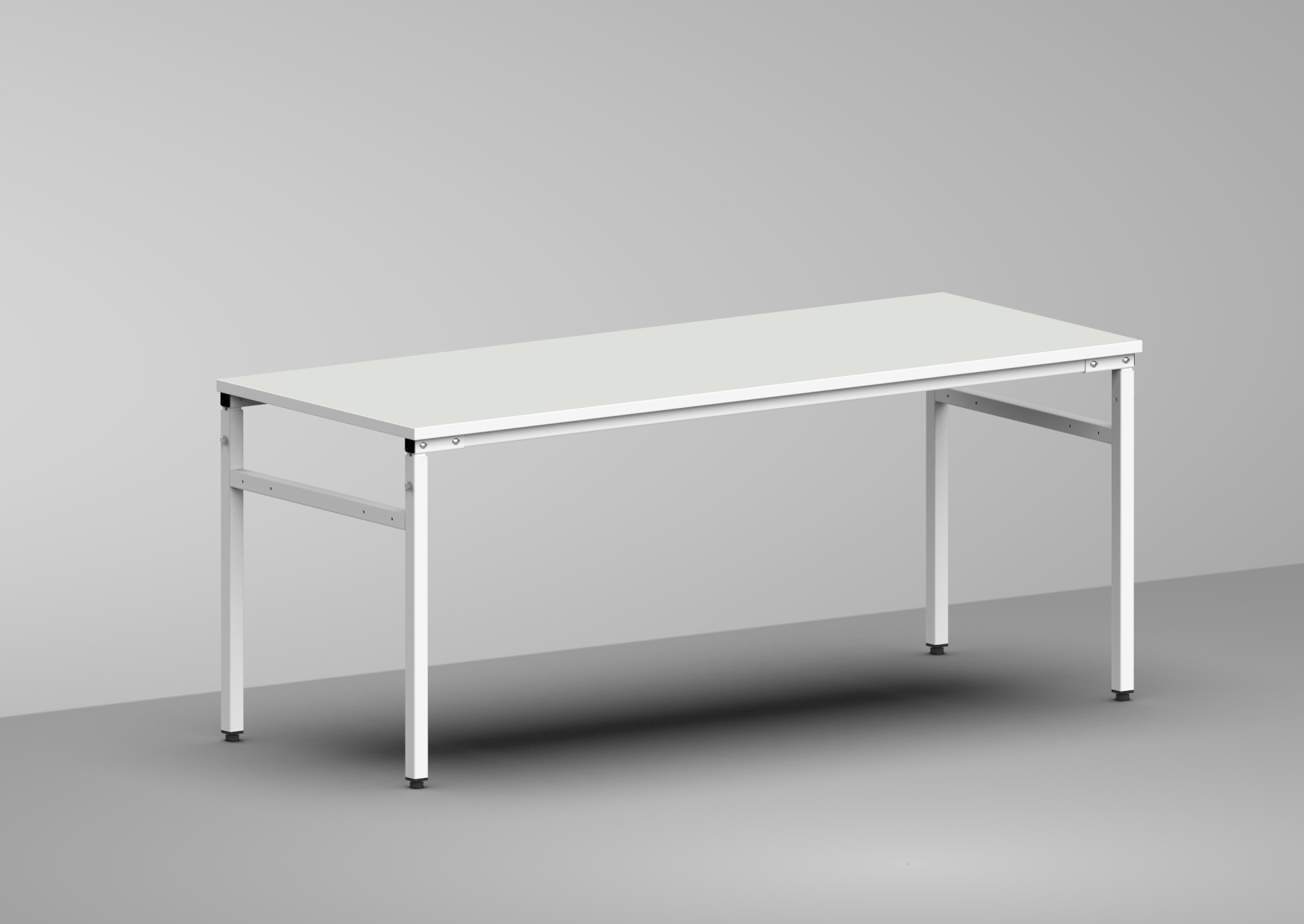
It will work well in situations where height adjustment is necessary only occasionally. If the workstation is used to perform one or more specific tasks with similar characteristics - such as office work, performed by only one user, frequent height adjustment is not so required. Height adjustment is done in a simple, but more involved way, by unscrewing with a wrench a screw on each of the four legs of the mounting table and adjusting the smooth height on the extending table legs. It's worth noting that this type of adjustment is also less expensive than the others, making it perfect if you want your workstation to be ergonomic, but still want the lowest possible price..
Crank adjustable tables
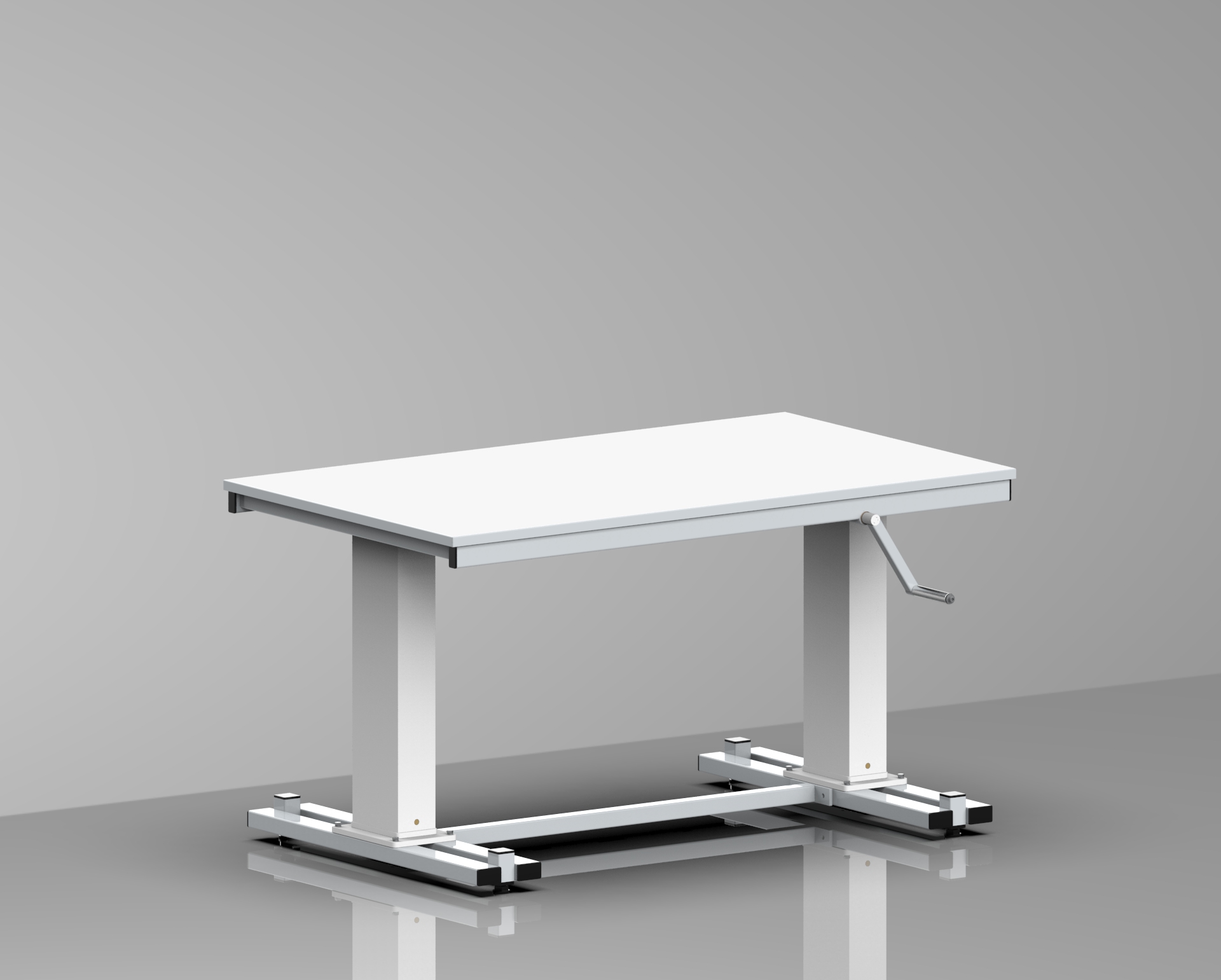
When work tables need to be adjusted more often (for example, in shifts at the plant, when two different people take turns using the same workstation), the following will work well: tables with height adjustment by hand crank. This type of mechanism does not require a wrench and is much simpler to use than adjusting using screws, but it takes time to change the height of the tabletop. In JABAMA's standard solutions, one turn of the crank is 3.6mm, and the crank itself can be stowed in a holder under the tabletop when the adjustment is finished. The crank adjustment will be a good solution especially in cases where electric adjustment cannot be used, for example in EX, or explosive atmospheres.
Electrically adjustable tables
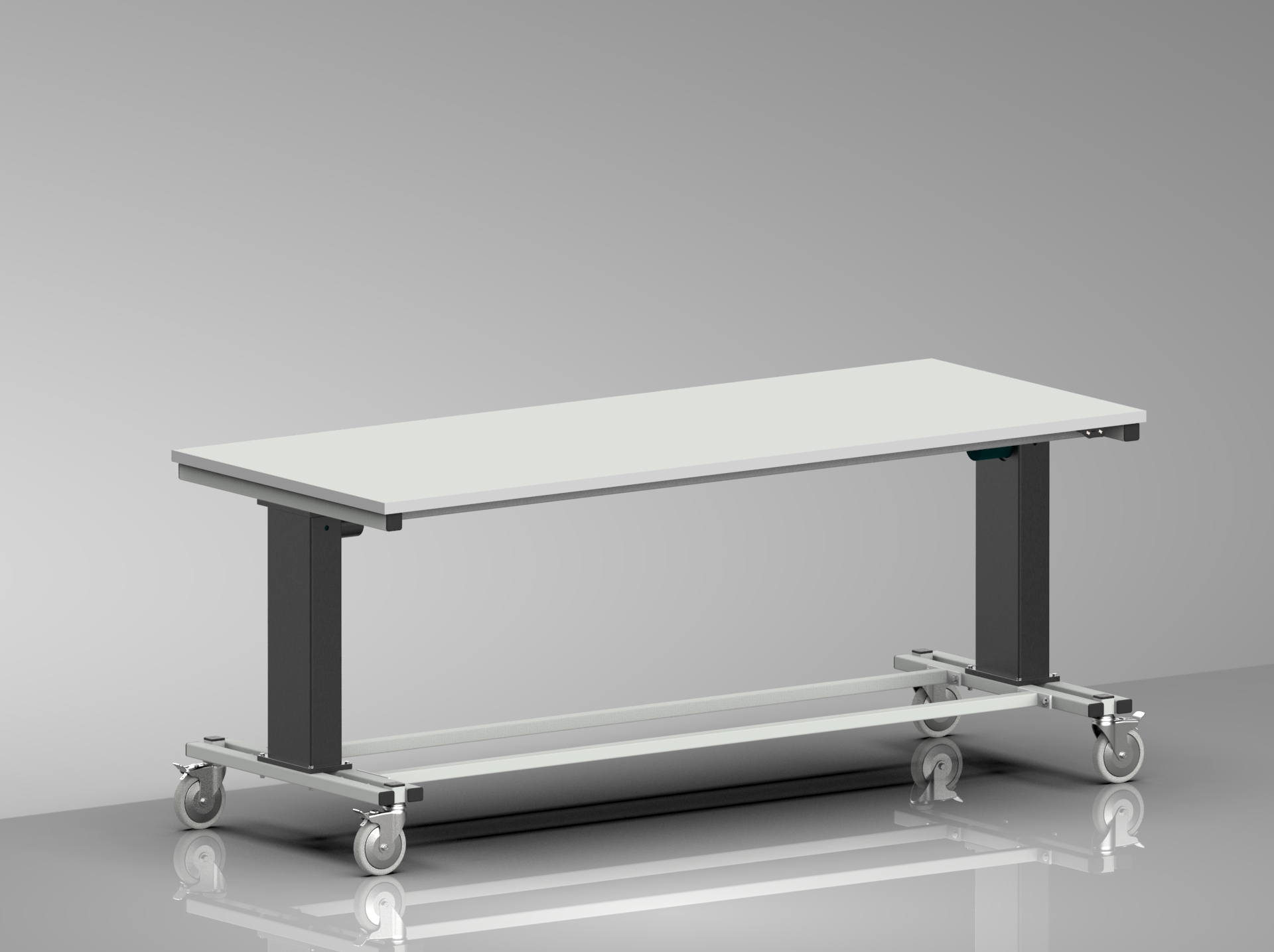
Electrically adjustable table on electric columns is the easiest and fastest way to adjust the working height of a workstation. Changing the height does not require the use of force and is done by pressing the appropriate button on the control panel located under the tabletop, connected to the controller, which in turn controls the electric columns that also act as the table's legs. Electric height adjustment is ideal for situations where the working height of the table is changed regularly and frequently, and therefore guarantees a very high level of comfort. This is relatively the most expensive solution, but the convenience it guarantees is definitely worth the price. It will also be a very good solution for office workers who change their working position to avoid injuries associated with prolonged sedentary work.
Comparison of JABAMA workstation adjustments
The range of JABAMA workstations is diverse and includes all the adjustment mechanisms described above. We encourage you to familiarize yourself with the following list in the form of a table and with the offer of workbenches from the Polish manufacturer JABAMA:
| Workstation type | Adjustment range | Load capacity | Comments |
| SMR worktable with smooth screw adjustment | 750-1150 mm | 300 kg | smooth adjustment with 4 screws using a wrench |
| SMR-K1 worktable with crank adjustment | 660-1040 mm | 200 kg | 1 rotation = 3,6 mm, crank lever can be stored under the tabletop |
| Reinforced SMR-K2 worktable with crank adjustment | 660-1040 mm | 300 kg | 1 rotation = 1,8 mm, crank lever can be stored under the tabletop |
| SMRE worktable with electrical adjustment | 680-1080 mm | 300 kg | adjustment with electric columns controlled via a remote |
